
You spent twenty minutes prepping, carefully applied two coats of color, sealed everything with a top coat, and even skipped washing the dishes. But by day four, the tips are already lifting, leaving you wondering whether it's your polish, your technique, or your nails themselves.
What you might not realize is that the base coat you chose may not be the best match for what your nails actually need.
Most people grab whichever clear bottle is on sale, assume all base coats do the same thing, and wonder why their results vary wildly. But a base coat designed to improve grip may not prevent staining from dark red polish. Likewise, a ridge filler may not help if you have oily nail beds, and a strengthening formula may not prevent chipping if the real issue is adhesion.
This guide breaks down the base coats that really make a difference for regular nail polish — no gel systems, UV lamps, or confusing marketing claims. You'll find the formula that best fits your specific needs, learn why chemistry matters more than brand loyalty, and get tips for applying it correctly so your next manicure lasts longer.
What you'll get from this article:
- A clear decision framework for choosing between grip, stain protection, strengthening, and ridge-filling formulas.
- Specific product recommendations with honest trade-offs.
- Application steps that actually affect wear time, based on nail-industry chemistry sources and recurring user patterns.
- Answers to the real questions people search: does base coat make polish last longer, can you skip it, does it need to dry or cure, and can base coat replace top coat.
This is a research-based guide. We compared official product information, formulation data, editorial testing, retailer review patterns, community discussions, and nail-industry chemistry sources. Prices and formulas can change, so check the current product page before buying.
What a Base Coat Actually Does (And Why Yours Isn't Working)
A regular nail-polish base coat sits between the natural nail and the color coat, and its chemistry helps determine whether your manicure stays put or starts to lift within days.
The four functions of a base coat:
- Adhesion: Creates a smooth surface that helps colour adhere, which is especially helpful for oily nail beds or polish that tends to chip quickly.
- Stain protection: Helps reduce direct contact between dark pigments and the nail plate, preventing yellowing from shades like reds, burgundies, and blues.
- Surface smoothing: Fills in minor ridges and texture, helping colour apply evenly without pooling or streaking.
- Flexibility or reinforcement: Depending on the formula, adds a little protection or flexibility to help weak nails resist breakage while you wear your polish.
What a base coat cannot do:
- Permanently rebuild or "feed" the nail plate (the nail is made of dead keratinized cells).
- Guarantee a specific number of wear days regardless of your lifestyle, nail flexibility, or polish formula.
- Replace a top coat (base coats prioritize adhesion; top coats prioritize surface hardness and scratch resistance).
- Cure under a lamp unless it is explicitly a UV/LED gel system.
Base Coat Versus Top Coat: Why Clear Doesn't Mean Interchangeable
| Feature | Base coat | Top coat |
|---|---|---|
| Goes directly on the natural nail | Yes | No |
| Main job | Adhesion and protection | Sealing and surface durability |
| Helps reduce staining | Often | Usually not its main purpose |
| Creates a hard glossy surface | Not primarily | Yes |
| Can replace the other product? | No | No |
Base coats are often designed to help products adhere well, while top coats need to stand up to scratches, friction, water, and everyday handling. A two-in-one product can be a convenient option, but it may not work as effectively as two products made for separate purposes.
Which Base Coat Do You Need? (Decision Framework)
Before you buy a base coat, use this framework to find the right fit. Focus on the formula type that addresses your needs rather than the marketing claims.
| Your problem | Formula to look for | Best direction |
|---|---|---|
| Polish chips or lifts within 2–3 days | Tacky or rubberized adhesion base | Orly Bonder-style formula |
| Dark polish stains nails yellow or orange | Clear protective or stain-resistant base | OPI Natural Nail Base Coat-style option |
| Nails bend, split, or feel weak | Flexible or treatment-style base | Essie Strong Start-style option |
| Visible ridges make sheer polish look uneven | Ridge-filling base | Zoya Get Even-style formula |
| You wear gel polish | Compatible gel base (separate category) | Do not substitute regular lacquer base |
A quick note: If your nails are peeling beneath the polish, a strongly adhesive base coat may stay in place while the natural nail layers flex or peel underneath. In that case, it's best to focus on nail health first — consider taking a break from polish, and check with a healthcare professional if the changes persist.
The Chemistry That Actually Matters
Regular nail lacquer typically contains volatile solvents, film-formers, resins, plasticisers, and pigments or other additives. The solvents help keep the product liquid and brushable in the bottle. Once applied, they evaporate, leaving a smooth, solid film behind. Nitrocellulose is a common film-forming ingredient in traditional lacquer formulas.
Other ingredients affect the film in different ways:
- Nitrocellulose helps form the dried lacquer film.
- Polyvinyl butyral (PVB) can contribute to film formation and adhesion.
- Resins and copolymers can affect grip, gloss, flexibility, and hardness.
- Plasticisers help reduce brittleness.
- Solvents control flow, viscosity, and drying behaviour.
- Pigment barriers and clear films can reduce direct contact between dark colorants and the nail.
Patent literature describes PVB-containing nail formulas as film-forming systems in which secondary resins can contribute to gloss and nail adhesion. Other nail-lacquer patents describe base coats and ridge fillers as formulas that may use higher resin levels to create a smooth, even film with good adhesion. Those patents explain possible formulation roles; they do not prove that a retail product will perform identically for everyone.
This is also why you should not assume that an ingredient such as biotin, keratin, calcium, or vitamin E "feeds" the nail. Once the nail plate has grown out, it is made largely of hard keratinized material. A treatment-style coating may protect it from mechanical damage, reduce breakage while worn, or make it feel harder, but that is different from repairing the nail biologically.
The Best Base Coats for Regular Nail Polish
1. OPI Natural Nail Base Coat: best overall
Best for: Everyday protection under regular polish, especially dark colors
Current formula highlights: Ethyl acetate, alcohol, butyl acetate, nitrocellulose, tosylamide/epoxy resin, PVB, camphor, benzophenone-1, dimethicone
Claimed wear: Up to seven days when used with proper preparation
Approximate US price: $12–13
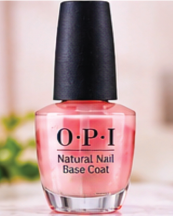
OPI Natural Nail Base Coat is the best starting point for most people who wear ordinary nail polish.
OPI says it is designed for use under OPI Nail Lacquer and claims up to seven days of wear and shine when used with proper preparation. The current formula includes ethyl acetate, alcohol, butyl acetate, nitrocellulose, tosylamide/epoxy resin, PVB, camphor, benzophenone-1, and dimethicone.
The formula makes sense as an everyday lacquer base: it contains a conventional film-former, resin, plasticiser-related components, and PVB. It is not marketed as a UV/LED gel base, and OPI specifically separates it from its Infinite Shine and GelColor products.
The main reason to choose it is balance. It is not trying to be a peel-off base, a heavy ridge filler, or a very hard nail treatment. It is a straightforward base for color, with an emphasis on protection and longer wear.
Choose OPI Natural Nail Base Coat if:
- You want one dependable base for ordinary polish.
- You frequently wear dark colors.
- You prefer a conventional, relatively thin lacquer base.
- You want a product that fits naturally with OPI Nail Lacquer.
Do not confuse it with: OPI Infinite Shine Gel-Like Base Coat or OPI GelColor Base Coat. Those belong to different product systems.
2. Orly Bonder Rubberized Basecoat: best for polish that chips
Best for: Grip-focused adhesion, oily nail beds, polish that lifts quickly
Current formula highlights: Solvents, tosylamide/epoxy resin, PVB, nitrocellulose, plasticiser, benzophenone-1
Finish: Slightly tacky or rubberized (intentional)
Approximate US price: $13–15
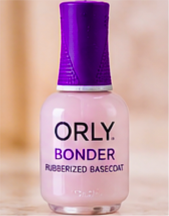
Orly Bonder is the most targeted choice for people whose polish lifts or chips unusually quickly.
Orly describes the product as a rubberized basecoat that works like "double-sided sticky tape." Its current ingredient list includes solvents, a tosylamide/epoxy resin, PVB, nitrocellulose, plasticiser, and benzophenone-1.
The distinctive feature is the finish. Orly Bonder is intended to dry with a slightly tacky or rubberized surface rather than a glass-smooth, glossy one. That texture is not a defect; it is part of the adhesion strategy.
Keep in mind that a highly adhesive base can behave differently depending on your nail flexibility, how thickly it's applied, and your removal habits.
Choose Orly Bonder if:
- Your polish starts lifting within a few days.
- You have oily nail beds.
- You want a grip-focused base.
- You are comfortable with a slightly tacky finish.
Avoid making it your first choice if:
- Your nails are already peeling under the polish.
- You tend to apply very thick layers.
- You prefer a completely smooth, glossy base.
- You remove polish by picking or peeling.
Apply a thin coat. A thicker layer is not automatically stronger and can make the manicure more vulnerable to lifting.
3. Essie Strong Start: best for weak or peeling-feeling nails
Best for: Treatment-style base under regular polish, weak or peeling-feeling nails
Current formula highlights: Butyl acetate, ethyl acetate, copolymer, nitrocellulose, isopropyl alcohol, acetyl tributyl citrate, dimethyl sulfone, another copolymer, biotin
Approximate US price: $9–11
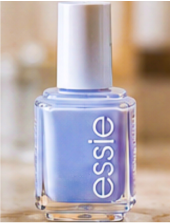
Essie Strong Start is the most appropriate option in this guide for someone searching for the best base coat for weak nails or the best base coat for peeling nails.
Essie describes it as a strengthening base coat infused with biotin. Its current ingredient list includes butyl acetate, ethyl acetate, a copolymer, nitrocellulose, isopropyl alcohol, acetyl tributyl citrate, dimethyl sulfone, another copolymer, and biotin.
That formula is better understood as a protective lacquer coating with a strengthening claim — not as a nutrient treatment that rebuilds the nail plate. A harder or more reinforcing film can make the nail feel stronger while it is worn and may reduce breakage caused by daily flexing. It cannot correct every cause of peeling, splitting, or brittleness.
The product is intended for regular nail polish. Essie's instructions call for one coat under two coats of Essie color, followed by a top coat. The product can also be worn alone if you want a clear manicure.
Choose Essie Strong Start if:
- Your nails bend, split, or feel weak.
- You want a treatment-style base under regular polish.
- You sometimes wear the base alone.
- You prefer a conventional lacquer formula rather than a UV/LED product.
If peeling is persistent, painful, sudden, or accompanied by discoloration, do not keep adding stronger coatings indefinitely. Consider taking a polish break and discussing the nail changes with a qualified healthcare professional.
4. Zoya Get Even Ridge Filling Basecoat: best for ridged nails
Best for: Visible ridges, uneven nail texture, smoother color application
Formula type: Dense, fiber-like ridge filler
Approximate US price: $14–17
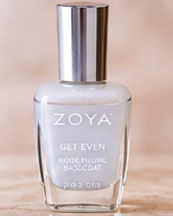
Zoya Get Even is the most relevant choice for visible ridges and uneven nail texture.
Zoya describes it as a ridge-filling basecoat that acts as a smoothing compound for natural nails. Its dense, fiber-like formula is intended to fill uneven areas and create a smoother surface for polish.
This is a different job from Orly Bonder. A ridge filler is not primarily chosen because it is extremely tacky. It is chosen because the color coat looks better over a more level surface.
The main trade-off is thickness. A ridge filler may require more drying time than a thin clear base. If you apply a heavy layer, the entire manicure becomes thicker and can lift more easily at the edges. Start with one thin coat and add another only if the product instructions and the surface require it.
A ridge filler disguises texture; it does not remove the reason the ridge exists. Longitudinal ridges are common, but sudden or pronounced nail changes deserve more attention than cosmetic smoothing.
Choose Zoya Get Even if:
- Polish pools around ridges.
- Sheer colors look uneven.
- Your nail surface looks visibly textured.
- You want a smoother canvas before applying color.
Choose Orly Bonder instead if your main issue is adhesion and early chipping rather than uneven texture.
5. Holo Taco Long-Lasting Base: best long-wear alternative
Best for: Adhesion-focused regular-lacquer base with clear long-wear positioning
Current formula highlights: Ethyl acetate, butyl acetate, nitrocellulose, adipic acid/neopentyl glycol/trimellitic anhydride copolymer, acetyl tributyl citrate, isopropyl alcohol, trimethylpentanediyl dibenzoate, PVB, benzophenone-1, colorant
Approximate US price: $16–18
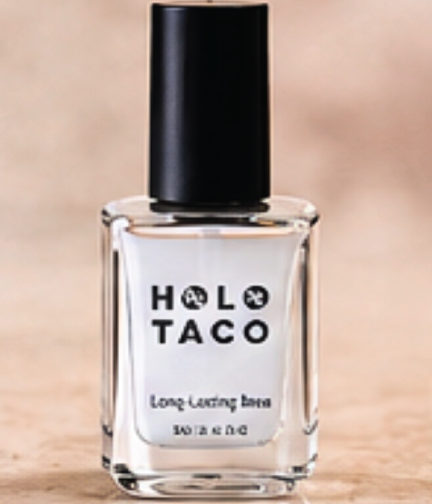
Holo Taco Long-Lasting Base is a good alternative for readers who want an adhesion-focused regular-polish base and prefer a formula marketed specifically around longer wear.
Holo Taco says the product helps bond polish to the nail and prevent chipping. Its current ingredient list includes ethyl acetate, butyl acetate, nitrocellulose, adipic acid/neopentyl glycol/trimellitic anhydride copolymer, acetyl tributyl citrate, isopropyl alcohol, trimethylpentanediyl dibenzoate, PVB, benzophenone-1, and colorant.
The ingredient profile looks like a conventional lacquer base with film-formers, resins, plasticiser-related components, solvents, and PVB. In other words, the product's long-wear positioning is chemically plausible without needing exaggerated claims about "curing" or "bonding" in the gel sense.
Holo Taco also sells a separate Sticky Base. That distinction is useful: a regular long-wear base and a deliberately tacky base are not necessarily the same product. If your polish chips from poor adhesion, a sticky formula may be more appropriate than a smooth everyday base.
Choose Holo Taco Long-Lasting Base if:
- You want a regular-lacquer formula with a clear long-wear purpose.
- You like Holo Taco products and can buy through its current US channels.
- You want an alternative to Orly Bonder without using a gel base.
6. Sally Hansen Double Duty: best convenience option
Best for: Low-cost, simple routine, experimentation
Formula highlights: Panthenol in base-coat role, nylon-12 in top-coat role, conventional lacquer ingredients
Approximate US price: $7–9
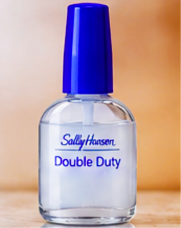
Sally Hansen Double Duty is worth mentioning because it is widely accessible and combines base-coat and top-coat functions in one bottle.
That convenience is its main appeal. The official positioning describes panthenol in the base-coat role and nylon-12 in the top-coat role, alongside conventional lacquer ingredients.
However, a two-in-one product is a compromise. A base coat needs to adhere to the nail and accept the color layer. A top coat needs to create a harder protective surface. If you want the best possible wear, a dedicated base coat plus a dedicated top coat is the more logical approach.
Choose Sally Hansen Double Duty if:
- You want a low-cost, simple routine.
- You are experimenting with regular polish.
- Convenience matters more than maximum performance.
Choose a dedicated base and top coat if your manicure routinely chips or peels within a day or two.
How to Apply Base Coat Correctly
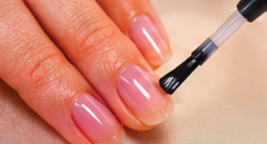
1. Start with dry, clean nails
Remove old polish, wash away residue, and let the nails dry fully. Avoid applying hand cream or cuticle oil immediately before painting.
If you use alcohol or acetone for preparation, use it sparingly and follow the product instructions. Excessive dehydration can make already-dry nails feel worse.
2. Do not soak your nails first
Water can temporarily change the nail's dimensions. Applying polish immediately afterward may increase the chance of shrinkage or poor adhesion as the nail returns to its normal state.
3. Apply one thin coat
A thin base coat usually performs better than a thick one. Keep the brush controlled and avoid flooding the cuticle or surrounding skin.
For a ridge filler, resist the temptation to use a thick layer to erase every line. The thicker the manicure, the more vulnerable it may be to dents and lifting.
4. Let the base coat dry as directed
Regular lacquer base coats dry as solvents evaporate. They do not need to be cured under a lamp unless the product is explicitly a gel system and says so.
Some sticky or rubberized bases may remain slightly tacky. That can be intentional.
5. Add thin color coats
Apply two thin coats when possible. Allow each layer to settle before adding the next.
6. Seal with a compatible top coat
A top coat protects the surface and helps reduce scratches, dullness, and edge wear. It is not a replacement for the base coat.
7. Cap the free edge
Brush a small amount across the nail tip. This helps protect the most exposed part of the manicure from water and friction.
Common Mistakes
- Using a gel base coat under regular polish – A UV/LED gel base coat is not a stronger version of a regular base coat. It is a different system with different curing requirements.
- Using regular base coat under true gel – A regular lacquer base is not designed to bond and cure with gel color. Follow the gel brand's system instructions instead.
- Applying too much product – Thick base, color, and top-coat layers can feel dry on the surface while remaining soft underneath. That leads to dents, wrinkles, bubbles, and peeling.
- Treating tackiness as a failure – A tacky finish may be deliberate in an adhesion-focused product such as Orly Bonder. It is not automatically evidence that the product has gone bad.
- Using base coat as top coat – The fact that both products are clear does not make them interchangeable.
- Picking off the manicure – If polish lifts, resist peeling it away. Picking can remove superficial layers of the natural nail and make future manicures more fragile.
Does Base Coat Make Nail Polish Last Longer?
Often, yes — but not automatically.
A base coat can improve the interface between the natural nail and the color layer. That may reduce early lifting and chipping. But wear also depends on:
- How flexible your nails are.
- How oily or dry the surface is.
- Whether you recently soaked your hands.
- How thick the layers are.
- Whether you cap the free edge.
- How much water, detergent, sanitizer, typing, or manual work your hands encounter.
- Whether the top coat is compatible.
- The polish formula itself.
FAQ
What is the best base coat for regular nail polish?
For most users, OPI Natural Nail Base Coat is the best everyday starting point because it is designed for regular lacquer, helps protect against staining, and has a brand claim of up to seven days of wear and shine. Choose Orly Bonder instead if your main problem is early chipping or lifting.
What is the best base coat for long-lasting polish?
Orly Bonder is the strongest choice when adhesion is the main problem. Its rubberized formula dries slightly tacky and is designed to help polish grip the nail. If you dislike a tacky finish, try OPI Natural Nail Base Coat or Holo Taco Long-Lasting Base.
What is the best base coat for peeling nails?
Essie Strong Start is the most relevant treatment-style option in this guide. It may help protect the nail while worn, but no base coat can diagnose or permanently repair every cause of peeling. Persistent, painful, or sudden nail changes deserve professional medical advice.
Related reading
If your manicure is failing at the top rather than the base, see our guide to common top-coat failures. If you're deciding between no-lamp gel-like systems, see Best Gel-Like Nail Polish Without UV Light.
Explore more buying advice in our Buying Guides category.